

Installation advice
Kitchen cabinet quality: what to check
Compare cabinet suppliers through board specification, edging, backs, joints and fittings. Practical delivery and installation checks without unsupported brand rankings.
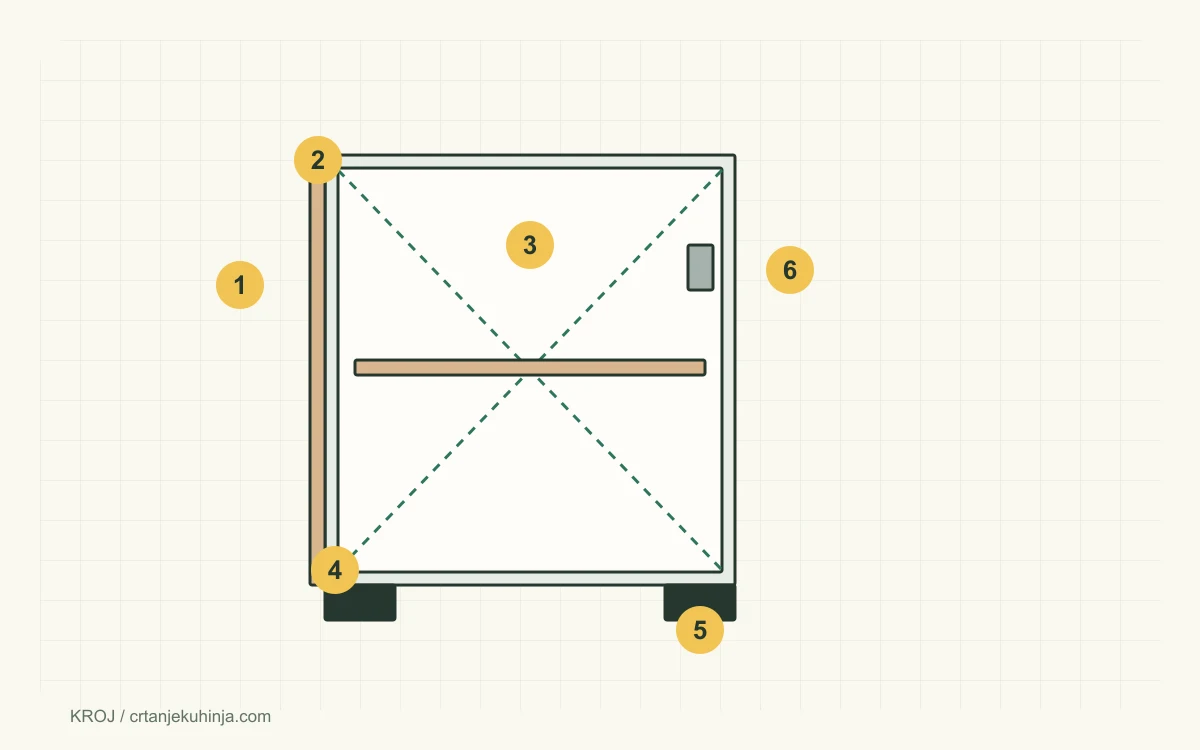
Assess cabinet quality through the actual construction, workmanship and material specification. Two companies can use board from the same manufacturer and deliver very different cabinets. A decor name and attractive front do not explain the joints, back construction or protection of cut edges.
Compare the same scope of supply
Ask for the board manufacturer and exact product, thickness, declared grade, back material and thickness, edge treatment, fitting codes and assembly method. Check whether levelling, fillers, cut-out sealing, wall cabinet fixing and final adjustment are included. This makes different quotations comparable.
Egger, Kronospan and Pfleiderer each manufacture different panel products. A company name alone does not identify the properties of the board being supplied. Without comparable tests and matching specifications, there is no sound basis for ranking one brand best for every cabinet. Request the technical sheet for the actual product.
Check board suitability and condition
P2 and P3 are not decor names. For particleboard, they describe intended use classes under EN 312: P2 for furniture in dry conditions and P3 for non-load-bearing applications in humid conditions. Egger explains P2 and P3 for Eurodekor, while Kronospan describes its P3 product applications.
Moisture resistance does not mean a cabinet can remain in standing water. Check panel flatness, damaged corners, swollen edges and consistency with the quotation. A thicker board alone cannot solve an excessive shelf span or poorly attached hangers. Consider intended use, span and support together.
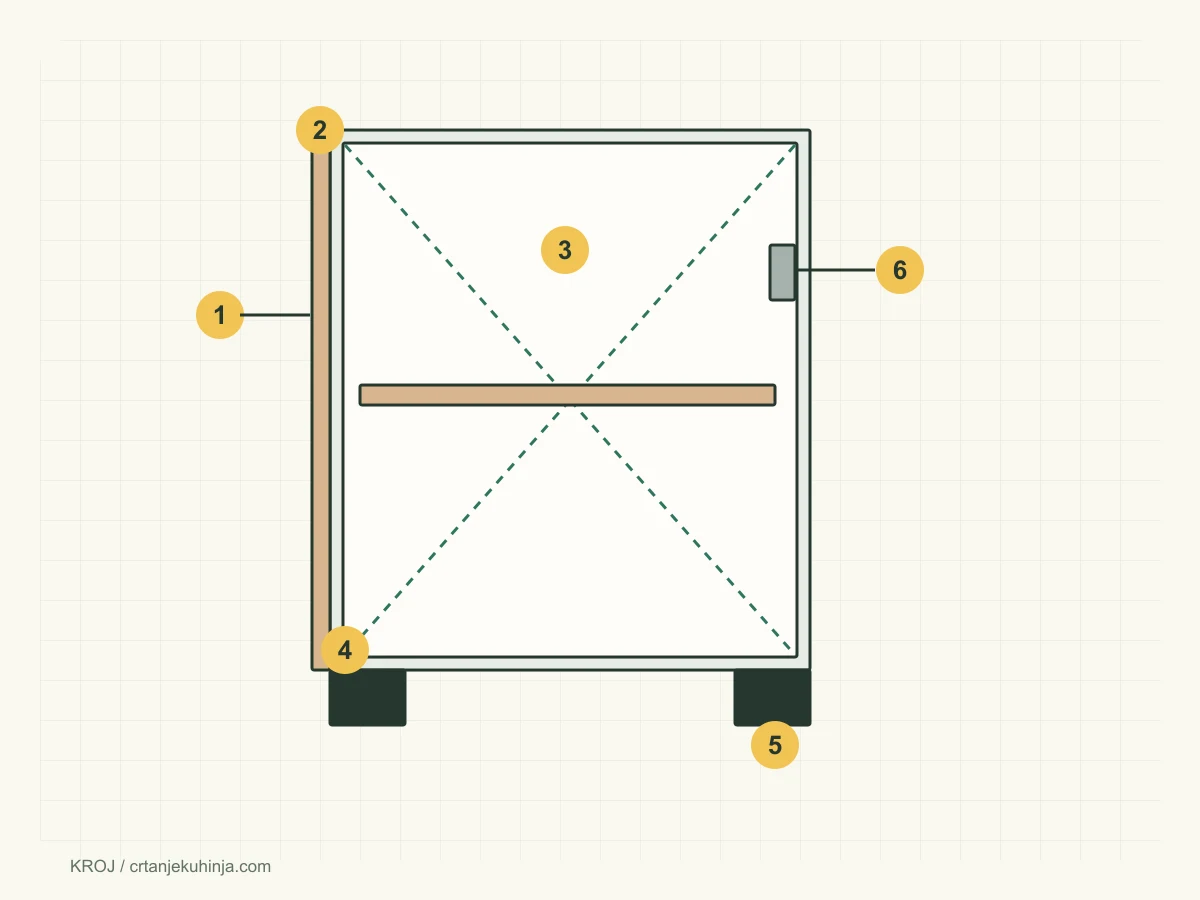
Cabinet inspection points: 1 board and flatness, 2 edging, 3 back and squareness, 4 joints, 5 supports, 6 hardware; this diagram does not rate individual brands.
Inspect edges and site-made cuts
Check that edging is bonded along its full length, without open joints, lifting or sharp adhesive residue. Inspect lower edges and areas near the sink. Adhesive type and process quality affect the result; the word PUR in a quotation does not by itself prove good edging.
Pay attention to edges created on site: sink cut-outs, pipe openings and trimmed fillers. Their protection must suit the material and its instructions. See choosing kitchen cabinet board for the basic terms, and confirm the final specification against the technical sheet.
Check backs and joints for a square cabinet
Compare diagonals before installation and inspect side-to-bottom joints for proper closure. A grooved back and a surface-fixed back can both be valid when designed accordingly. Material, thickness, seating and fixing method all matter. Do not judge the cabinet only by back thickness.
Drilled holes must suit the actual fittings, without breakout that compromises their seating. A screw that spins without tightening needs a proper repair or replacement part. In a combined Confirmat and dowel joint, also check that the dowels allow the joint to close fully.
Test fittings within their specified limits
Check runner and hinge codes, declared capacity, how the load is defined and installation requirements. A component's rating does not establish the load capacity of the entire cabinet. Do not improvise a test by hanging a person on a door or drawer. Perform functional checks within the limits specified for the assembly.
After fitting, check levelling, stable leg support, adjacent cabinet connections and all opening paths. For wall cabinets, confirm the wall substrate and specified fixings. The same furniture can perform poorly when a run is pulled against an uneven wall without levelling. A kitchen plan and written specification make discussions with the installer clearer.
Related installation advice
Continue with Dishwasher drain hose: installation checks and Ceiling-height kitchens: installation problems.
Frequently asked questions
Which company makes the best cabinet carcasses?
Without matching specifications, samples and comparable checks, a universal ranking is not justified. Compare materials, workmanship, construction, hardware, installation and complaint terms in the actual quotations.
Is P3 particleboard waterproof?
Do not treat it as waterproof. P3 is intended for humid conditions within its declaration; edges and cut-outs still require protection and leaks need repair.
Does a thicker back automatically mean a better cabinet?
No. Thickness is one parameter. Check its connection, cabinet squareness and intended assembly use.