

Materials
Choosing a kitchen board: decor, thickness and edge banding
Board choice comes down to three decisions: decor, thickness and edge banding. What really differs between boards — and what is just the pattern.
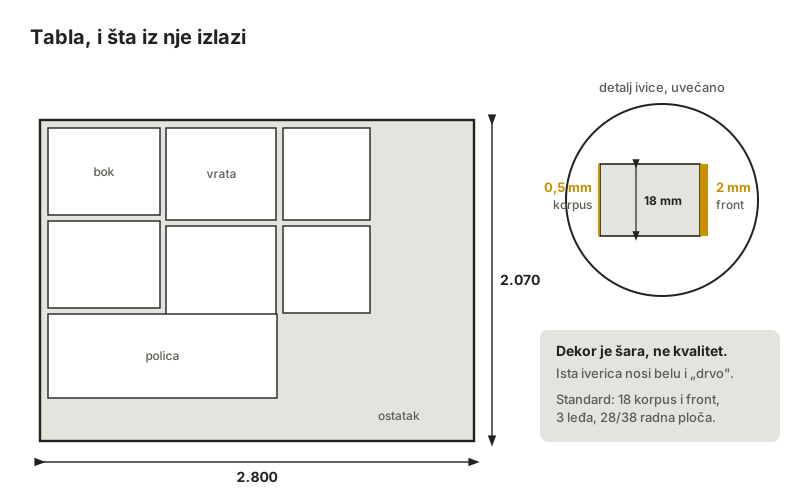
Melamine-faced chipboard is what the vast majority of kitchens are built from: carcasses almost always, fronts very often. The choice comes down to three decisions — and none of them is "which brand is best".
Decor is a pattern, not a quality grade
Plain white, sonoma oak, anthracite — a decor is melamine-soaked paper pressed onto the same chipboard. Within one producer and one class, a white board and a woodgrain board differ in price, not in durability. Choose decor with your eyes: in the planner every decor from the current price list has a photo of the board and its price, so you see both the look and what it carries in the estimate.
Thickness: 18 for everything, 28 or 38 for the worktop
- Carcasses and fronts: 18 mm — the standard the hardware and the formulas are made for.
- Backs: 3 mm hardboard, nailed across the whole back.
- Worktop: 28 or 38 mm, with a postformed (rounded) front edge.
Edge banding is what wears first
The edge is the most vulnerable part of any board: moisture gets in there and knocks land there. Fronts therefore carry 2 mm ABS banding on all four edges, carcasses 0.5 mm on visible edges. Saving on banding buys you swelling around the sink within a year or two.
What actually differs between boards
- Emission class: E1 (or better) is the standard for furniture in a home.
- Density and flatness: cheaper boards can bow — visible on long fronts.
- Decor range and lead time: in practice the biggest difference — the kitchen waits for the board, not the other way round.
- Surface resistance: for fronts around the oven and sink, the abrasion class is worth a look.
Frequently asked questions
Is MDF better than board?
For flat fronts, board does the job. MDF makes sense when the front is not a flat panel: routed, painted or foiled. For carcasses MDF has no advantage — only a price.
How many boards does an average kitchen need?
It depends on the layout — so it is calculated, not guessed: the planner states the exact board count per decor for your kitchen, with the nesting plan.
What about moisture around the sink?
The sink cabinet gets a full back and rails on edge; the cutout edges in the worktop are siliconed at fitting. Board survives a kitchen — it does not survive standing in water.