
Appliances
Built-in appliances: exact cabinet sizes for the oven, hob and dishwasher
An oven needs a 590 niche, a dishwasher a 600 or 450 opening, a fridge its own niche per model. The cabinet sizes for every appliance.
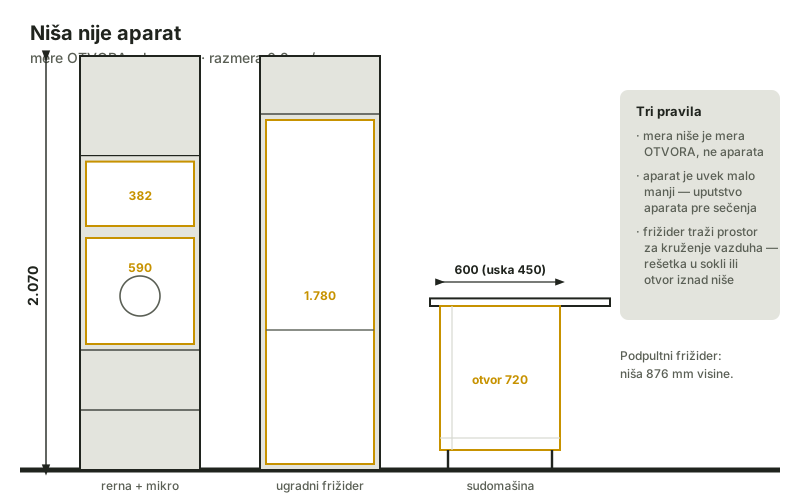
Built-in appliances are made for exact niches — and there is no improvising: a 596 mm appliance does not fit a 590 niche, and a 610 niche leaves a visible gap. Here are the sizes cabinets are built to, the same ones the planner cuts by.
Oven in a base cabinet
Cabinet width 600 mm; clear niche 590 mm high and at least 560 deep. The front below the oven is 120 mm; the shelf carrying the oven is cut short at the back for the cable and airflow, and there is NO back behind the oven — the appliance breathes through it. Power: a dedicated circuit, the point behind the neighbouring cabinet.
Oven in a tall unit
The 2070 mm tall unit carries the oven at eye height: the same 590 niche, with a rail above it. A microwave above the oven needs its own 382 mm niche — the combination goes into the same unit.
The hob
An opening is cut in the worktop to the appliance template. Under the hob sits an oven or a drawer — so the power point is NEVER directly under the hob, but behind the neighbouring cabinet. Above: the extractor per its manual, and at least 650 mm for gas.
The dishwasher
Widths 600 or 450 mm, entering a 720 opening between the legs and the worktop. Fully integrated takes our front (716 mm, fixed to the appliance door); semi-integrated keeps its own control panel visible. Nothing is left behind the machine — supply, waste and power come from the side, through the neighbouring cabinet.
The fridge
- Under-counter: an 876 mm niche in a 600 cabinet, no bottom and no back.
- Tall unit: niches of 1025, 1225 or 1780 mm — per appliance; the cupboard doors above follow the niche split.
- Freestanding: not built in — it takes a gap of exact width in the run, plus air for the door swing.
Frequently asked questions
My appliance has a non-standard height — now what?
In the planner the niche is entered per appliance (the fridge picks its niche, the oven its clear height), so the list comes out for YOUR appliance, not an average one.
Does a freestanding cooker need a cabinet?
No — it needs a gap of exact width in the run and a power point behind it (the only appliance allowed one behind its back, because it pulls out).
Who connects the appliances?
Power the electrician, water and waste the plumber; the installations plan tells both where the points are — before the tiles, not after.